
Read more
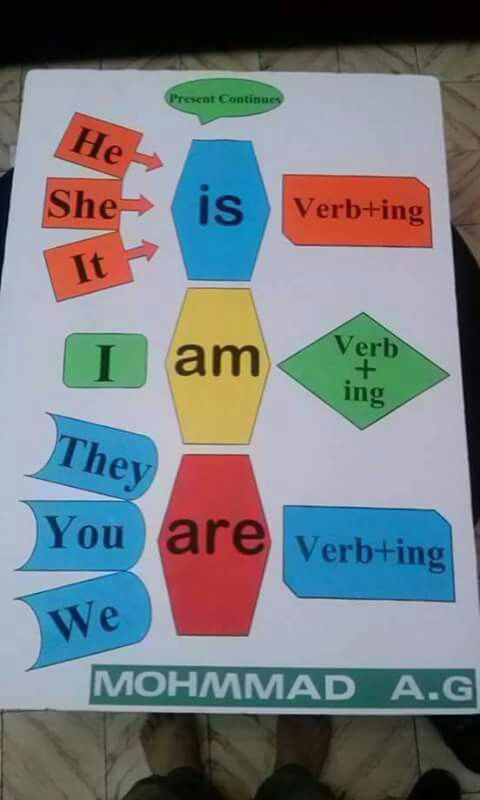
Present Continuous Tense is used to express an activity that happening now.

10 Common Idioms and Their Meanings
- On the go = Sibuk beraktivitas.
- Hard at work = Sedang bekerja dengan giat.
- In full swing = Sedang berlangsung dengan sangat aktif.
- Burn the midnight oil = Belajar atau bekerja hingga larut malam.
- Keep busy = Tetap sibuk.
- Hit the books = Belajar dengan serius.
- Caught in the act = Tertangkap basah saat melakukan sesuatu.
- Up and running = Sudah mulai berjalan atau beroperasi dengan baik.
- On the move = Sedang bergerak atau bepergian.
- Lend a hand = Memberikan bantuan.
1.6 PRESENT CONTINUOUS TENSE
The Present Continuous Tense is used to express an activity that is happening now, is in progress at the moment of speaking, or is taking place around the present time. This tense is formed by using Subject + am/is/are + Verb-ing + Object/Complement.
The verb to be changes according to the subject: I am, You are, We are, They are, He is, She is, and It is. The main verb always ends with -ing.
Examples of affirmative sentences are: I am reading a magazine now. We are studying English now. You are wearing a tie now. They are swimming in the hotel pool now. He is drinking some coffee now. She is cooking some vegetables now. It is eating some meat now. Dewi is buying some apples now.
To make negative sentences, place not after am, is, or are.
Examples: I am not reading a newspaper now. We are not studying French now. You are not wearing sunglasses now. They are not swimming in the river now. He is not drinking any orange juice now. She is not cooking any rice now. It is not eating any fish now. Dewi is not buying any grapes now.
To make interrogative (yes/no) questions, place am, is, or are before the subject.
Examples: Am I reading a magazine now? Are we studying English now? Are you wearing a tie now? Are they swimming in the hotel pool now? Is he drinking coffee now? Is she cooking vegetables now? Is it eating meat now? Is Dewi buying apples now?
Spelling Rules for Verb + -ing
When changing a verb into the -ing form, follow these rules:
-
Most verbs simply add -ing.
- read → reading
- study → studying
- wear → wearing
- play → playing
-
Verbs ending in -e usually drop the e before adding -ing.
- write → writing
- make → making
- come → coming
- dance → dancing
-
Verbs ending in -ie change ie to y before adding -ing.
- lie → lying
- die → dying
- tie → tying
-
For short verbs ending in consonant-vowel-consonant (CVC), double the final consonant before adding -ing.
- run → running
- swim → swimming
- sit → sitting
- stop → stopping
- get → getting
Useful Time Expressions
The Present Continuous Tense is often used with these time expressions:
- now = sekarang
- right now = tepat sekarang
- at the moment = saat ini
- currently = saat ini
- at present = pada saat ini
- today = hari ini
- this week = minggu ini
- this month = bulan ini
- Look! = Lihat!
- Listen! = Dengarkan!
Examples:
- She is studying English right now.
- They are playing football at the moment.
- Look! The baby is sleeping.
- Listen! Someone is singing.
Situational Conversation 1
A: What are you doing now?
B: I am watching television now.
A: Is your brother watching television too?
B: No, he isn't. He is reading a magazine.
Situational Conversation 2
A: Is your sister playing a computer game?
B: No, she isn't. She is having dinner.
A: Is your father writing a letter?
B: No, he isn't. He is polishing his shoes.
Situational Conversation 3
A: Is your mother sleeping in the bedroom?
B: No, she isn't. She is preparing our dinner.
A: Is your nephew playing in the garden?
B: Yes, he is.
Situational Conversation 4
A: Is your niece taking a bath?
B: No, she isn't. She is singing a song.
A: Are your uncle and your aunt listening to the radio?
B: Yes, they are.
Situational Conversation 5
A: Where is Anton now?
B: He is studying in the library.
A: Is Dewi studying with him?
B: No, she isn't. She is doing her homework at home.
Tips to Remember
- Use am with I.
- Use is with he, she, it, and singular nouns.
- Use are with you, we, they, and plural nouns.
- Always use the -ing form of the main verb.
- Use some in affirmative sentences and any in negative sentences and questions when talking about countable or uncountable nouns.
Examples:
- She is drinking some milk.
- She isn't drinking any milk.
- Is she drinking any milk?
Pattern
Affirmative: Subject + am/is/are + Verb-ing + Object + Time Expression.
Negative: Subject + am/is/are + not + Verb-ing + Object + Time Expression.
Interrogative: Am/Is/Are + Subject + Verb-ing + Object + Time Expression?
Jawablah pertanyaan-pertanyaan berikut dengan jujur dan bertanggungjawab!
| No. | Pertanyaan | Jawaban | |
|---|---|---|---|
| 01. | Saya mengetahui arti kata-kata pada pada teks di atas |
Ya | Tidak |
| 02. | Saya bisa mengucapkan kata-kata sesuai dengan audio/video yang disajikan |
Ya | Tidak |
| 03. | Saya bisa memperagakan percakapan dengan membaca teks yang tersedia |
Ya | Tidak |
| 04. | Saya bisa memperagakan percakapan dengan sedikit membaca teks |
Ya | Tidak |
| 05. | Saya bisa memperagakan tanpa membaca teks |
Ya | Tidak |
| 06. | Saya bisa memperagakan tanpa membaca teks disertai dengan variasi baru atau pengembangan teks |
Ya | Tidak |
| 07. | Saya bisa membuat karya video terkait dengan percakapan yang diperagakan |
Ya | Tidak |
| 08. | Saya bisa membuat video dan telah disosialisasikan pada sosial media yang saya miliki |
Ya | Tidak |
Bila ada jawaban "Tidak", maka segera lakukan review pembelajaran, terutama pada bagian yang masih "Tidak".
Bila semua jawaban "Ya", maka Anda dapat melanjutkan ke pembelajaran berikutnya.
Buatlah jurnal harian untuk membantumu dalam mempercepat proses pembelajaran dengan menjawab soal evaluasi diri berikut ini.
- Apakah yang kamu telah pelajari pada bagian ini?
- Apa yang menarik pada sesi ini?
- Apa kendala yang kamu alami?
- Apa yang kamu lakukan untuk mengatasi kendala tersebut?


